


Running a medical practice comes with a strange balancing act. You want your team focused on patients, but somewhere behind every appointment there is an insurance verification, a code, a claim and eventually a payment that needs to arrive.
When that side of the practice starts getting messy, the question usually comes up: should we keep medical billing in house or outsource it?
There isn’t one answer that works for every healthcare organization. A small specialty practice has very different needs from a growing multi location group. Still, understanding the real differences can make the decision much easier.
What Does In House Medical Billing Actually Require?
Keeping billing in house gives a practice direct control over its team. Your billers work closely with physicians and front desk staff and communication can happen quickly when documentation needs clarification.
That sounds ideal, and sometimes it is.
The part that gets overlooked is everything required to maintain that department.
You need experienced medical billers and coders. Someone has to train them, supervise performance, manage absences and keep the team current with payer requirements and coding changes. Billing software, reporting systems and compliance processes need attention too.
If one experienced employee leaves, suddenly a fairly important part of the revenue cycle may depend on finding a replacement quickly.
For larger healthcare organizations, that infrastructure may make sense. For smaller or growing practices it can become surprisingly expensive.
What Changes When Medical Billing Is Outsourced?
With outsourced medical billing, an external team takes responsibility for agreed parts of the revenue cycle.
That may include eligibility verification, charge entry, claim submission, payment posting, denial management and A/R follow up.
The attraction isn’t simply lower staffing costs.
A good medical billing company should already have people who understand payer workflows and know how to work aging claims. It should also have enough capacity that one employee being absent doesn’t bring follow ups to a stop.
That continuity matters more than it sounds.
In House vs Outsourced Medical Billing: A Practical Comparison
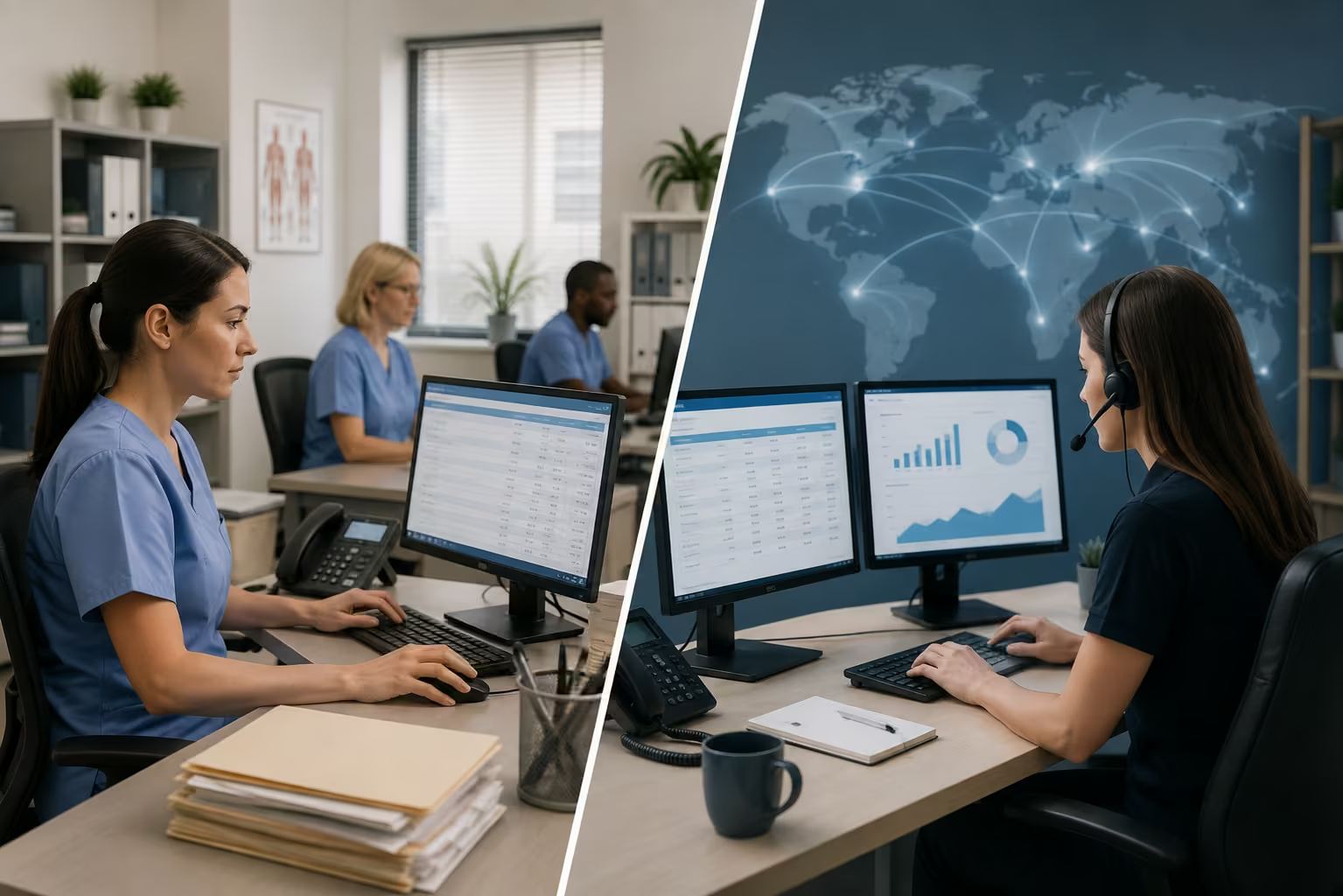
Put the two models side by side and the tradeoff becomes clearer. In house billing offers closer day to day control and may suit large organizations with established RCM departments. Outsourced medical billing offers greater scalability, access to specialized expertise and less responsibility for recruitment and workforce management. An internal department carries salaries, benefits, training, technology and turnover costs while an outsourced model usually converts much of that into a more predictable operating expense.
Neither model automatically produces better collections. The quality of the people, processes and reporting still decides that.
When Does Outsourcing Make Sense?
There are a few signs worth paying attention to.
- Denial rates are becoming difficult to control
- A/R is growing faster than collections
- Billing staff turnover is disrupting operations
- Providers have limited visibility into billing performance
- The practice is growing but the administrative team cannot keep pace
One problem alone doesn’t necessarily mean you should outsource. Several happening together deserves a closer look.
Don’t Outsource Blindly
Choosing a billing partner based only on price can create a different set of problems.
Ask how performance will be measured. Find out who handles denials and old A/R. Understand what reports you’ll receive and how often. Clarify how patient information is protected and how the team communicates with your practice.
You should actually gain visibility after outsourcing, not lose it.
At Sahar Technologies, we approach medical billing as part of the wider revenue cycle. Claim submission matters, of course, but so do eligibility, denial patterns, A/R follow ups, reporting and the operational gaps happening around them.
The aim is pretty simple. Help healthcare providers build a revenue process they can see, understand and improve.
Final Thoughts
The real question isn’t whether outsourced medical billing is universally better than in house billing.
It’s whether your current model is giving your practice the financial control it needs.
Look at the numbers. Look at staff workload. Review denials and aging claims. Then consider what it actually costs to maintain the system you have today.
That usually makes the answer much clearer.
Frequently Asked Questions
Is outsourcing medical billing cheaper than hiring an in house team?
It can be, particularly when salaries, benefits, recruitment, training, software and management costs are considered together. Actual savings depend on practice size and billing complexity.
Can a small medical practice outsource billing?
Yes. Small and independent practices often use outsourced billing because maintaining a complete internal RCM team can be difficult.
Will I lose control of my revenue cycle if I outsource?
You shouldn’t. A reliable billing partner should provide regular reporting and clear performance visibility so the practice remains informed.
What medical billing tasks can be outsourced?
Services can include eligibility verification, medical coding, charge entry, claim submission, payment posting, denial management and accounts receivable follow up.
How do I choose a medical billing company in the USA?
Look beyond price. Review healthcare experience, reporting capabilities, data security practices, communication, denial management processes and the ability to scale with your organization.
If you have any questions regarding “In House vs Outsourced Medical Billing”, feel free to contact us. For inquiries, call us at: +92 329 8263808.
Disclaimer: The above information is subject to change and represents the views of the author. It is shared for educational purposes only. Readers are advised to use their own judgment and seek specific professional advice before making any decisions. Sahar Technologies is not liable for any actions taken by readers based on the information shared in this article. You may consult with us before using this information for any purpose.